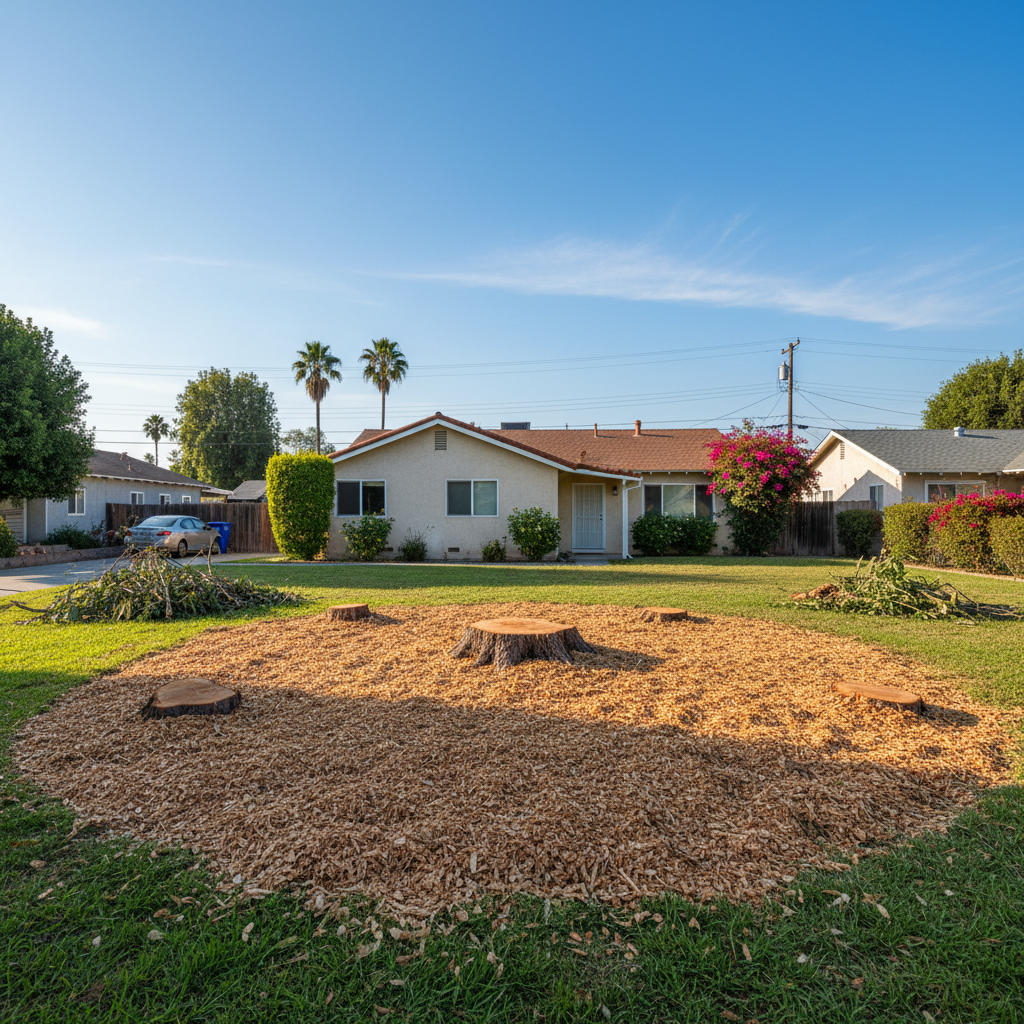
Getting rid of a dead or overgrown tree on your property is never a cheap project, but knowing what to expect can keep you from getting taken for a ride. If you live around Lynwood, you are dealing with tight lots, clay-heavy soils, and mature root systems that can complicate things fast. Tree Removal costs money, and Tree Removal requires proper planning so homeowners can budget right before calling out a crew in Lynwood, CA.
Typical Price Ranges for Tree Removal
Most standard Tree Removal jobs in our area land between $500 and $2,200. Naturally, height and trunk diameter dictate the bulk of that price tag. Small ornamental trees or younger fruit trees under 30 feet usually run from $500 to $1,000. Medium trees sitting between 30 and 60 feet generally cost $1,000 to $1,500, which accounts for the extra labor and rigging required to drop sections safely into a confined backyard. Massive trees over 60 feet—think towering eucalyptus or heavy old pines—often start at $1,500 and can easily climb past $2,200 if they require cranes or specialized bucket trucks.
What Actually Drives the Cost Up?
Two yards in the same Lynwood neighborhood can get wildly different quotes for the exact same tree size. Here is what shifts the price:
- Proximity to structures: Trees wedged right up against a garage, power lines, or a neighbor's vinyl fence require piece-by-piece dismantling using ropes and rigging, which takes hours longer.
- Species and wood weight: Heavy hardwoods or water-logged trunks weigh significantly more to haul away, and palm trees require specialized disposal because they do not chip like regular timber.
- Accessibility: If our crew cannot get a truck or chipper close to the tree and has to wheelbarrow heavy rounds out to the street, expect the labor portion of the quote to reflect that extra sweat.
What Is Included in a Proper Quote?
A legitimate quote from Lynwood Tree Service or any reputable local contractor should spell out the entire scope of work. Look closely at the paperwork. Basic Tree Removal should cover the actual cut-down, chipping of brush, and hauling away all the major debris. Ask explicitly if wood-hauling is included, or if they are planning to leave you with a massive stack of logs. Stump grinding is almost always a separate line item, usually priced by the diameter inch, so do not assume the hole will be flush with the ground unless it is written into the contract.
How to Avoid Overpaying
Getting multiple bids is smart, but do not automatically grab the cheapest contractor who drops a flyer on your door. Make sure whoever you hire carries active liability insurance and workers' comp—otherwise, you could be on the hook if a branch drops onto your roof or a worker gets hurt on your property. Be wary of bids that seem unrealistically low, as they often leave you with a half-finished job, unhauled logs, or surprise fees at the end of the day. Talk directly to the crew lead, ask what equipment they are bringing, and make sure cleanup expectations are crystal clear before any chainsaws fire up.